A comprehensive guide to our systematic approach in building robust, high-quality diaphragm walls for deep excavation projects
A diaphragm wall is a reinforced concrete structural wall constructed in the ground to serve as a retaining wall or part of a foundation system.
It is commonly used in deep excavations, basements, and underground structures to support soil and groundwater, ensuring stability and safety during construction. The wall is built by excavating narrow, deep trenches and filling them with reinforced concrete, creating a continuous, strong barrier capable of withstanding lateral soil and water pressure.
The D-Wall construction involves a sequence of precise processes including guidewall preparation, trench excavation, reinforcement cage placement, and concrete casting using specialized techniques like tremie concreting.
Provides excellent load-bearing capacity and lateral support
Effective barrier against water seepage and hydrostatic pressure
Minimal noise and vibration, ideal for congested city areas
Allows simultaneous excavation and wall construction
Our systematic approach to building world-class diaphragm walls
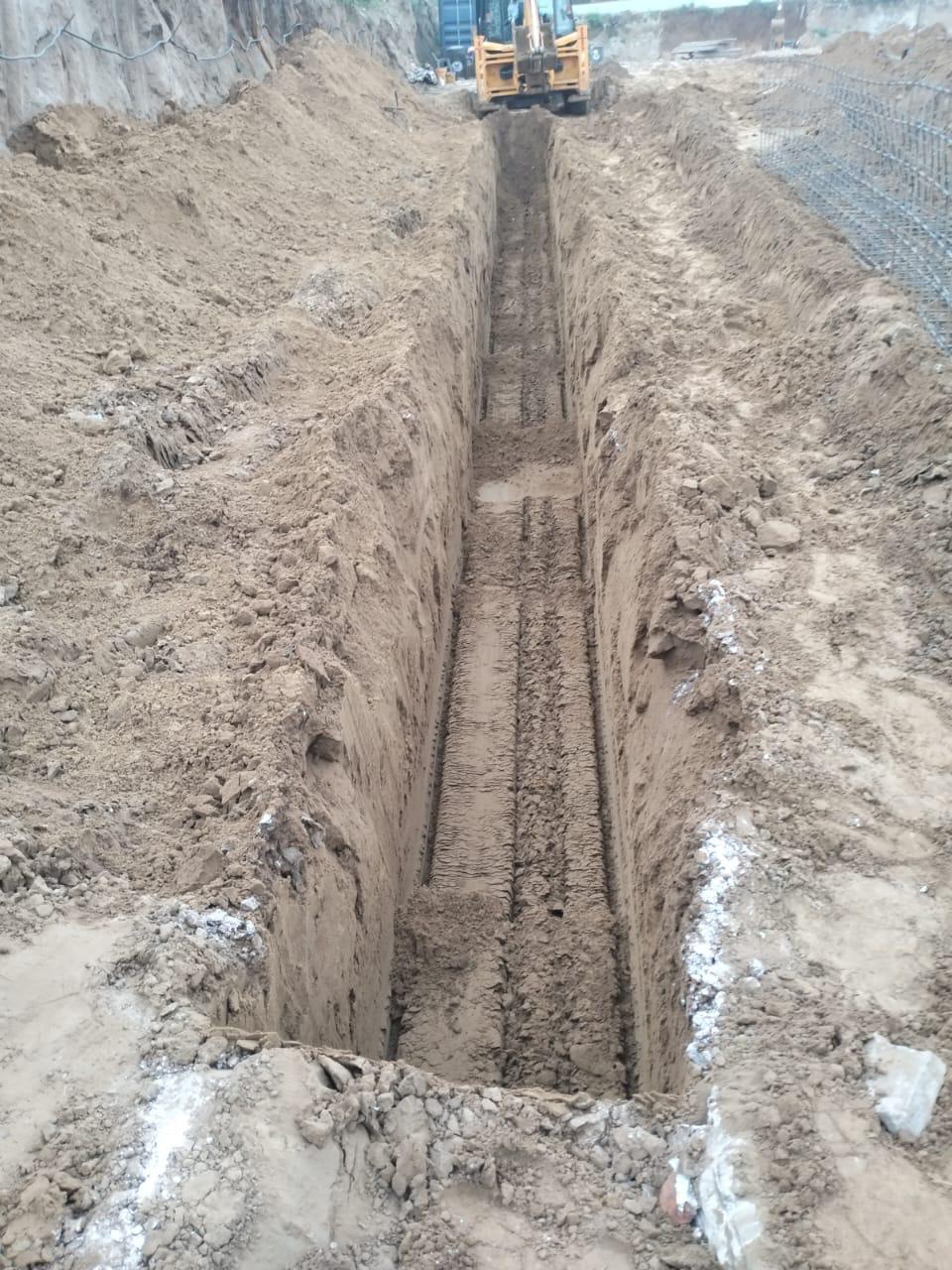
Excavating soil to prepare a trench for constructing the guidewall. This initial step involves careful site preparation and marking of the exact alignment where the diaphragm wall will be constructed. Precision at this stage is crucial for the entire wall's accuracy.
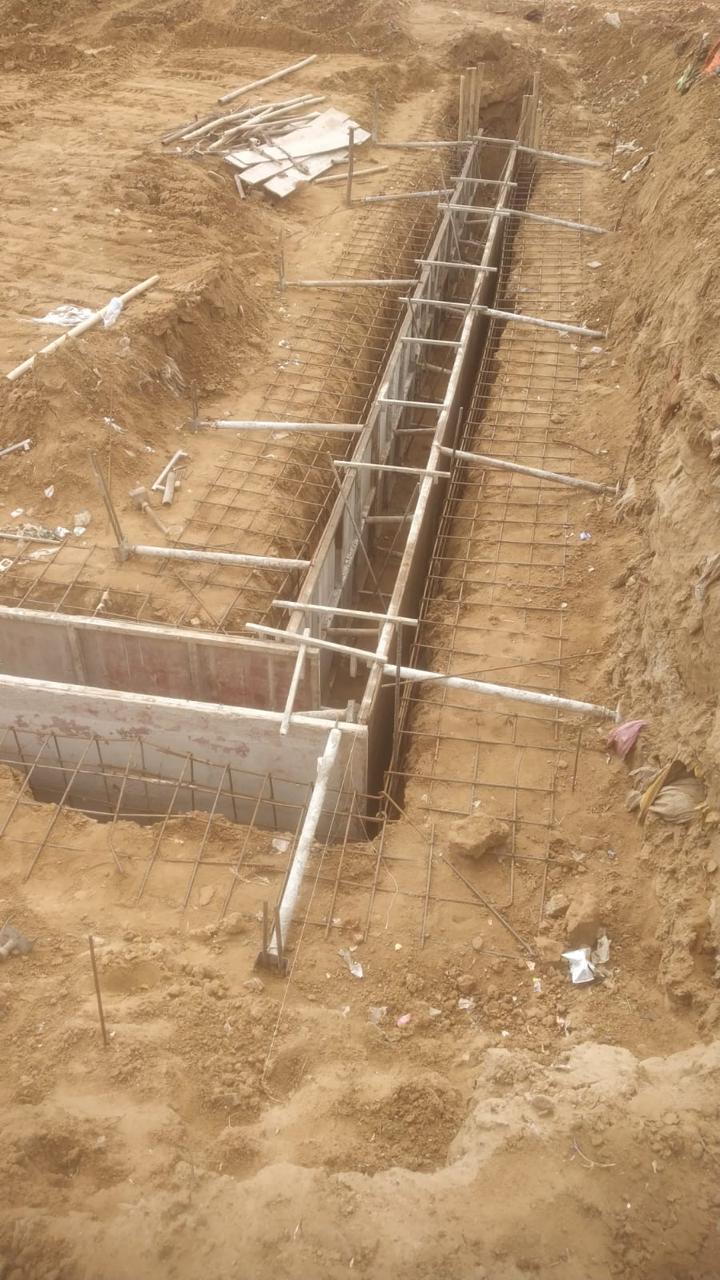
Installing formwork and alignment for the guidewall structure. The guidewall serves as a reference structure that maintains the position and verticality of excavation equipment during the main wall construction. It typically consists of two parallel concrete walls on either side of the proposed diaphragm wall.
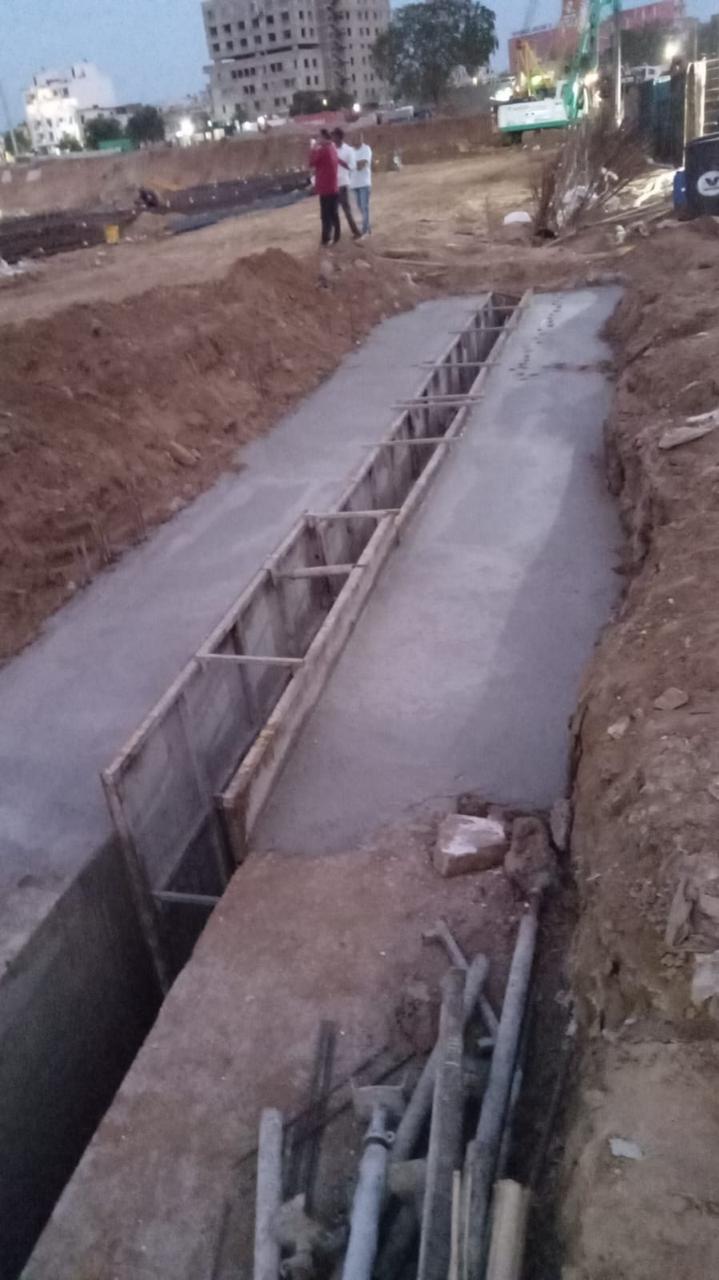
Pouring concrete to create a stable guidewall foundation. High-quality concrete is used to ensure the guidewalls have sufficient strength to withstand the forces from excavation equipment and provide accurate guidance throughout the construction process. Proper curing is essential for achieving design strength.
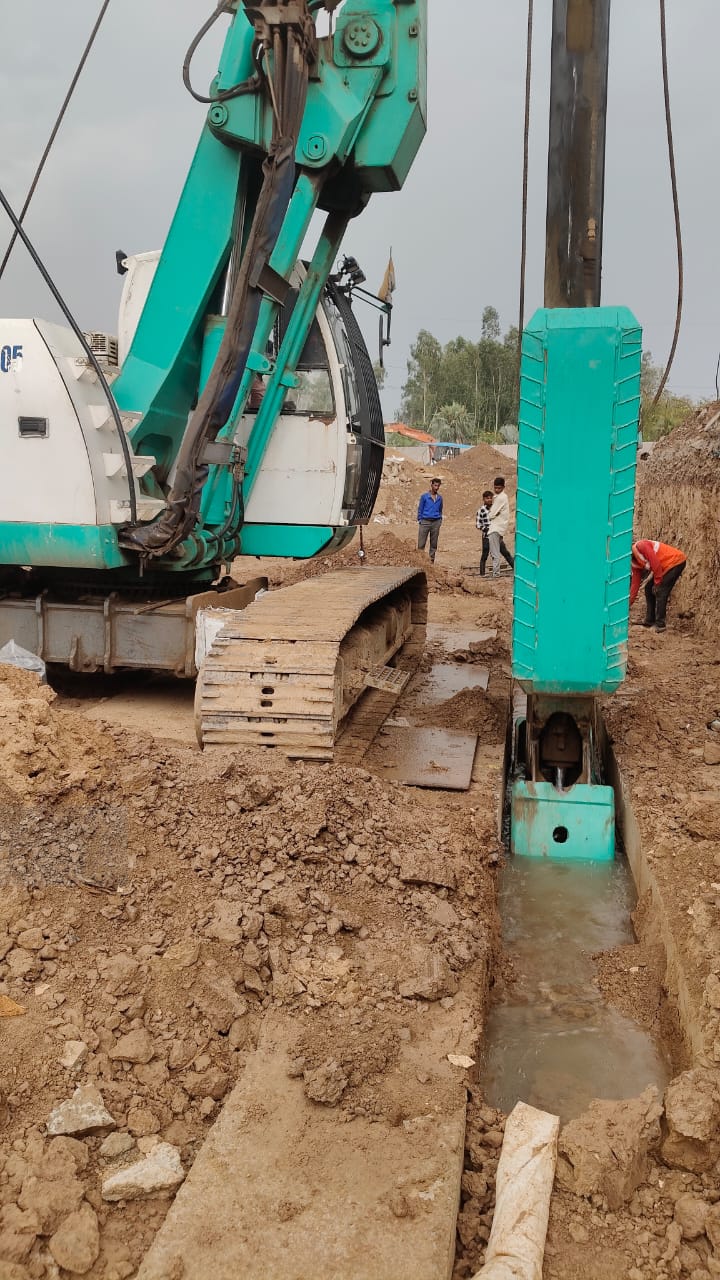
Cutting grooves in the guidewall to guide the diaphragm wall panel. This process involves using specialized equipment like grab buckets or hydro-mills to excavate narrow, deep trenches between the guidewalls. Bentonite slurry is used to support the trench walls and prevent collapse during excavation.
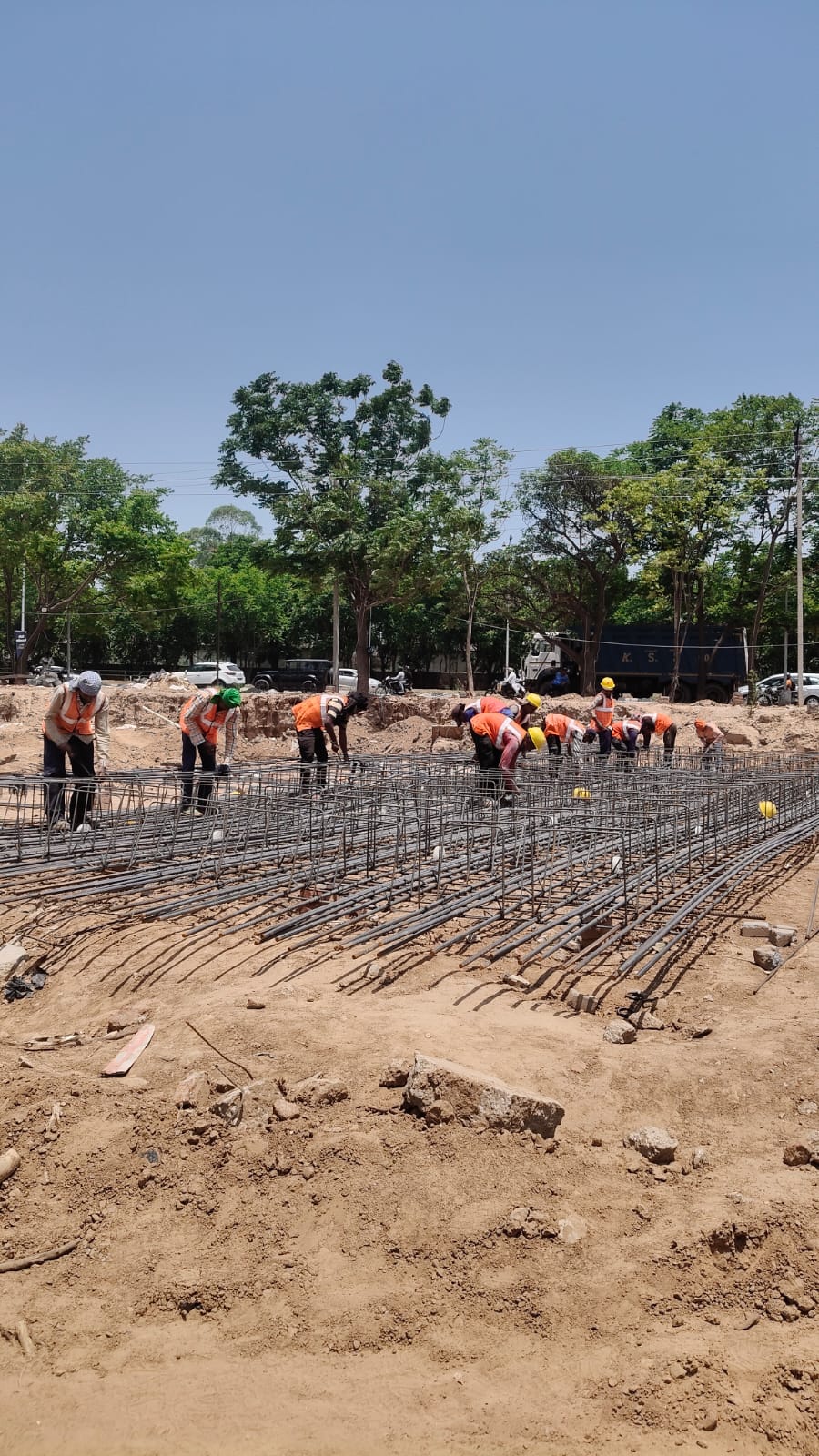
Bending reinforcement steel as per the designed cage specifications. Steel reinforcement bars are fabricated and bent according to detailed engineering drawings. This includes main reinforcement, distribution bars, shear links, and any special reinforcement required for specific load conditions or wall joints.
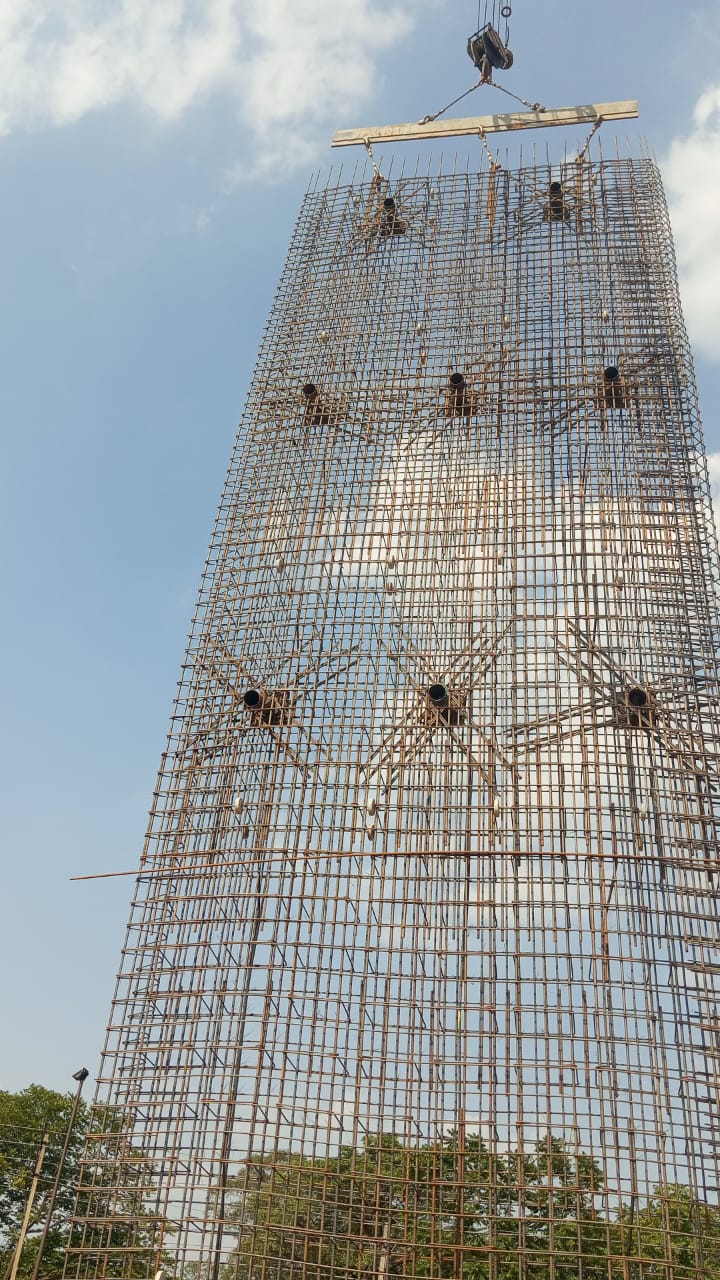
Lifting the prefabricated steel reinforcement cage using cranes. The assembled reinforcement cage, which can be extremely heavy and large, is carefully lifted using heavy-duty cranes. Multiple lifting points are used to ensure the cage maintains its shape and integrity during the lifting operation.
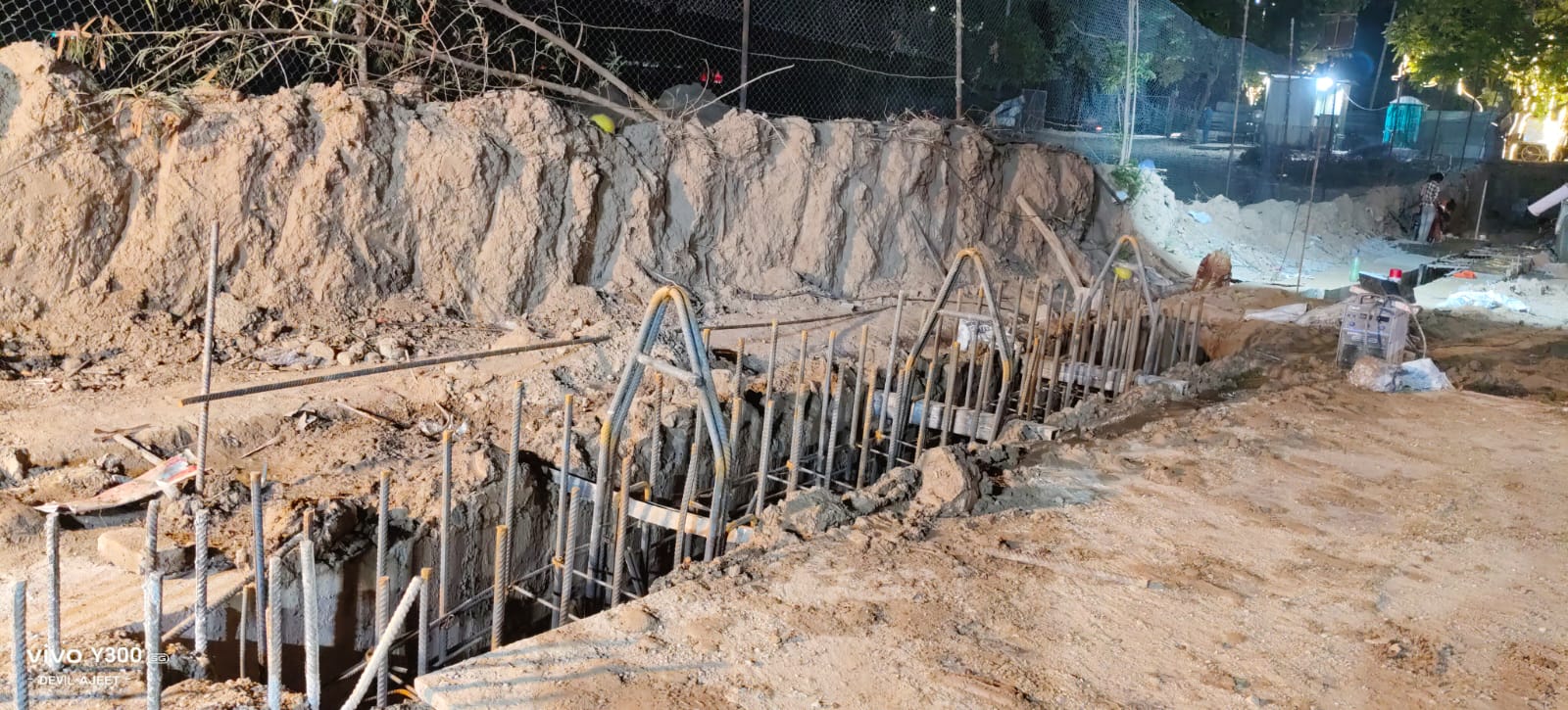
Lowering the reinforcement cage carefully into the excavated trench. This critical operation requires precise control to ensure the cage is positioned accurately within the trench, maintaining proper cover to the concrete and alignment with adjacent panels. Spacers are used to maintain correct positioning.
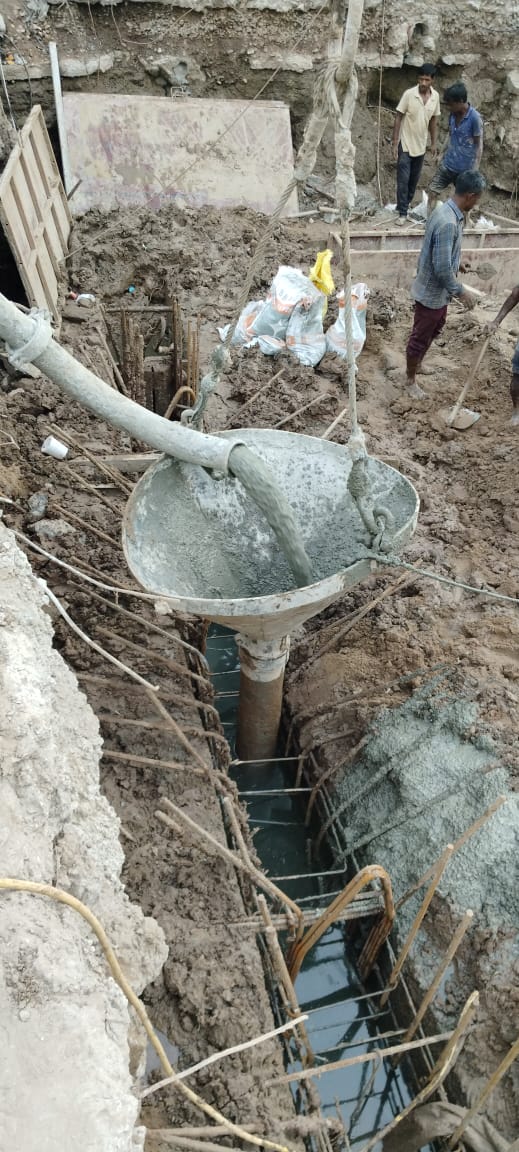
Concreting the diaphragm wall panel using tremie method. The tremie pipe is lowered to the bottom of the trench, and concrete is poured continuously from bottom to top, displacing the bentonite slurry. This method ensures high-quality concrete placement without segregation and maintains continuity throughout the wall.
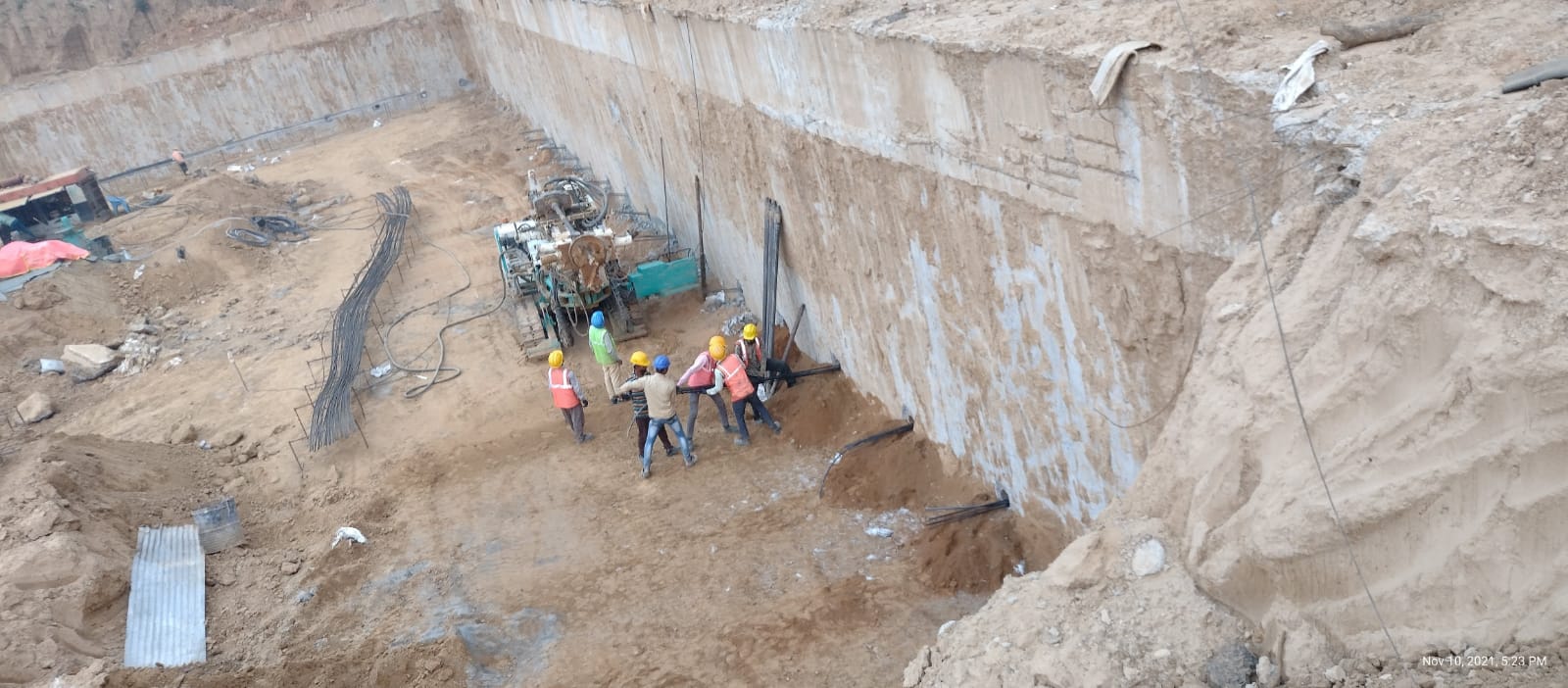
Installing anchors for added stability and load transfer. Ground anchors or tie-backs are installed to provide additional lateral support to the diaphragm wall, especially during and after excavation. These anchors are drilled into stable soil or rock layers and post-tensioned to apply the required load.
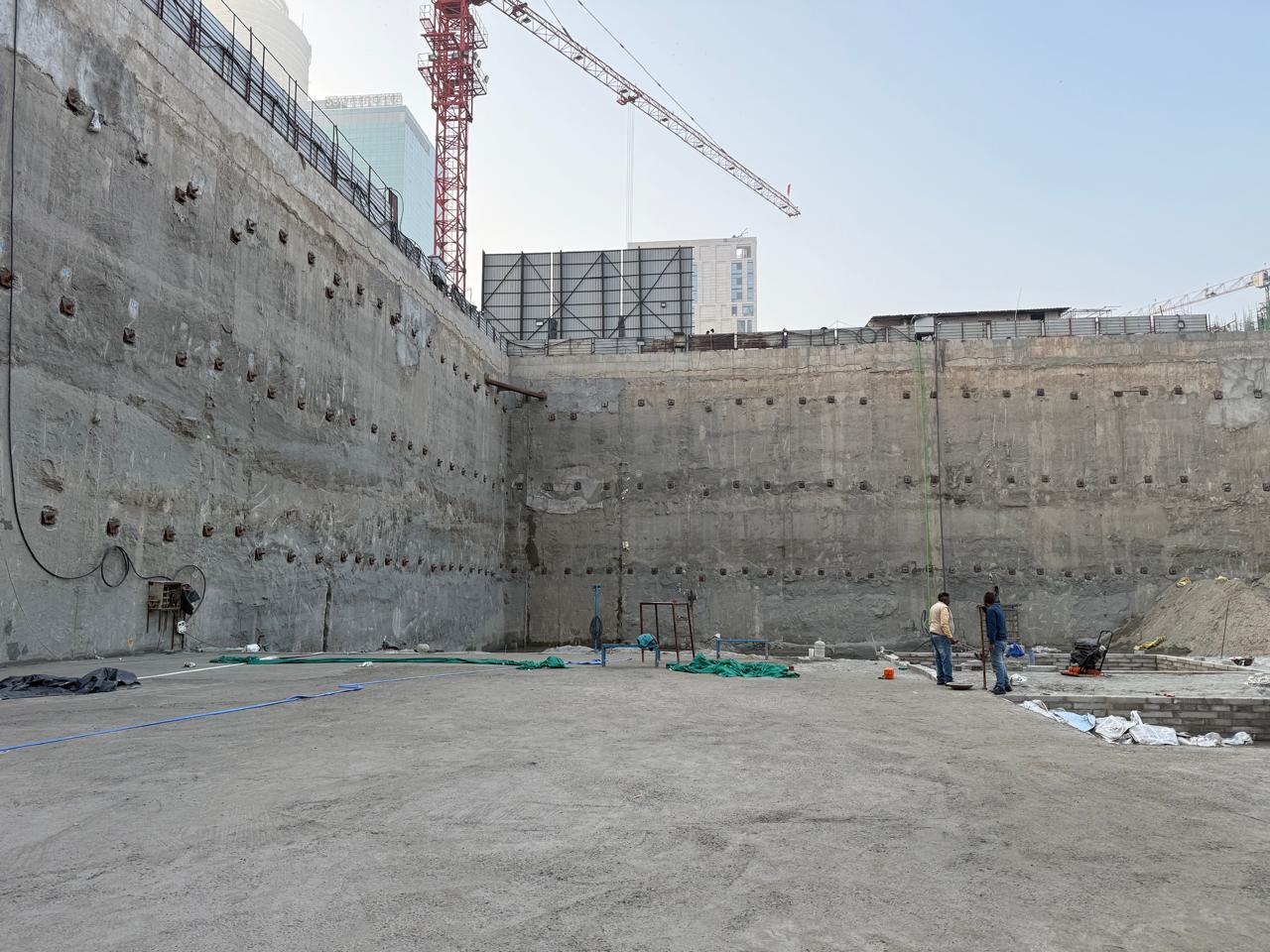
Completion and finishing of diaphragm wall construction. This final stage includes joint cleaning, surface treatment, installation of waterproofing systems if required, and final quality checks. Any minor defects are repaired, and the wall is prepared for integration with the main structure.
Expertise, precision, and commitment to excellence
Highly qualified engineers with extensive D-Wall construction experience
State-of-the-art equipment and modern construction methodologies
Rigorous testing and quality control at every construction stage
Timely project completion without compromising on quality or safety
Comprehensive safety protocols and trained personnel on every project
Complete project management from design to final completion
Our experts are ready to discuss your project requirements and provide customized solutions.